

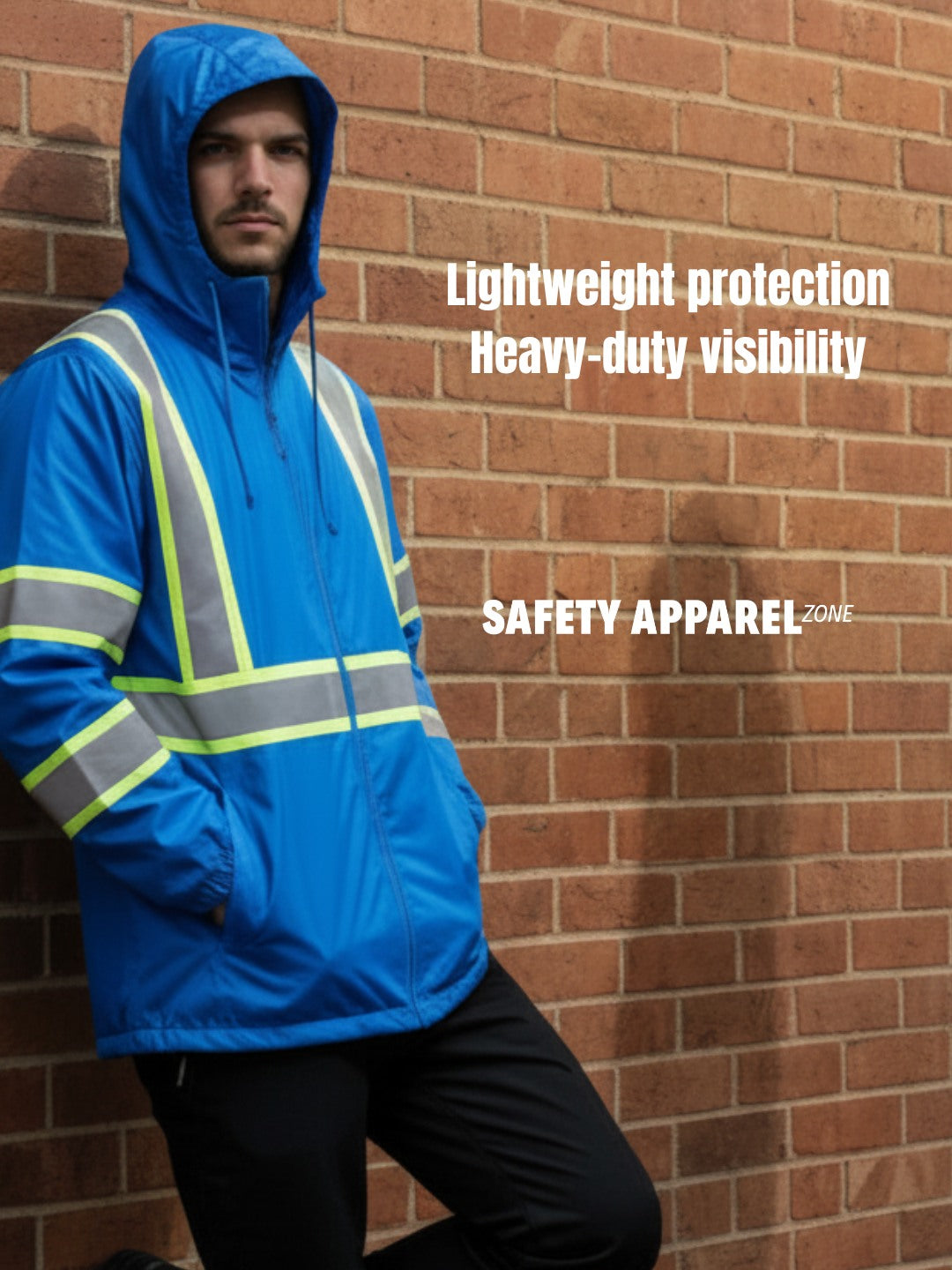
Quick answer: If you work in steady, heavy rain for hours, you need true waterproof rain gear with sealed seams. For everything else, like drizzle, mist, wind, cool mornings and on-and-off showers, a water-resistant hi-vis windbreaker is lighter, cooler, far more breathable and more comfortable to wear all day. Most crews in mild climates are better served by a windbreaker plus a packable rain shell for the rare downpour.
"Rain jacket" and "rain gear" are some of the most-searched terms on our site. Before you buy, it helps to know what you actually need, because the heaviest rain suit isn't always the right answer.
Waterproof vs water-resistant: what the words mean
| Waterproof rain gear | Water-resistant windbreaker | |
|---|---|---|
| Keeps out | Sustained, heavy rain | Light rain, drizzle, mist, spray, wind |
| Construction | Coated or laminated fabric (often PVC or PU), sealed seams | Tightly woven polyester, often with a water-repellent finish |
| Breathability | Low. You get sweaty from the inside. | High. Moves heat and moisture out. |
| Weight and feel | Heavier, stiffer, noisier | Light, flexible, easy to move in |
| Best for | Storms, all-day wet work, washdown areas | Daily wear in variable weather, wind, cool mornings |
Why most crews live in a windbreaker, not a rain suit
Full rain gear is great when it's pouring and miserable when it isn't. Once the rain slows, a non-breathable suit traps sweat, and you end up wet from the inside. A hi-vis windbreaker blocks wind chill, sheds light rain, and breathes well enough to wear through a full shift, including the dry hours. In places like Southern California, the Southwest and much of the South, that covers the great majority of "rain days."
Our windbreakers
ANSI Class 3 option: for roadwork and traffic
The Hi-Vis Class 3 Zip-Up Windbreaker with Reflective Strips is certified ANSI/ISEA 107 Type R, Class 3, in safety green or safety orange. It's lightweight, water-resistant 100% polyester with an attached hood and 360° reflective strips. It's the right outer layer when you work near traffic in wind or light rain, because the jacket is what drivers see. (Not FR.)
Enhanced visibility option: for everyday and off-road work
The Zip-Up Windbreaker with Reflective Strips gives you the same lightweight, weather-ready build in everyday colors with reflective accents. It's good for warehouse yards, commuting, landscaping away from roads and wearing off the clock.
Plain option: for layering and life outside work
The Zip-Up Windbreaker Jacket with Hood in Black, Navy and Charcoal is a clean, packable layer for the drive in, the shop, or the weekend.
Compare them side by side in Safety Windbreaker Jackets and Enhanced Visibility Windbreakers.
How to stay dry without buying a full rain suit
- Start with a wicking base. A polyester long-sleeve like the Hooded Hi-Vis Safety Tee (100% polyester) dries far faster than cotton if water gets in.
- Add the windbreaker for wind and light rain. Keep the hood up. It's the easiest way to stop water running down your collar.
- Layer warmth underneath, not on top. A hoodie under the windbreaker keeps the reflective outer layer visible. More on that in our fall and winter layering guide.
- Keep a cheap packable poncho or rain shell in the truck for the rare all-day storm.
Stay visible in the rain
Rain, spray and gray skies cut visibility for drivers, and headlight glare off wet roads makes it worse. If you work near traffic, your outermost layer must be hi-vis. A rated vest hidden under a black rain jacket doesn't count. Either wear a rated jacket like the Class 3 windbreaker above, or put an ANSI vest over the top. For after-dark rain, reflective tape does the heavy lifting. Read our night shift guide.
FAQ
Is a windbreaker waterproof?
Not fully. Windbreakers are water-resistant. They shed light rain and drizzle but will eventually soak through in sustained heavy rain.
Can I wash a water-resistant windbreaker?
Yes. Wash cold on gentle, skip fabric softener (it reduces water repellency) and hang dry. See how to wash hi-vis.
Parka, bomber or windbreaker?
Windbreaker for wind and mild weather, bomber for cool days, parka for real cold. Our outerwear comparison breaks it down by climate.
Compartir:
Electrician Shirts: Funny Tees for Sparkies (Plus the One Safety Rule to Know)
When to Replace Hi-Vis Clothing: 6 Signs Your Safety Gear Is Done