
Daytime hi-vis and night-shift hi-vis aren't quite the same problem. In daylight, fluorescent color does most of the work catching a driver's eye. After dark, it's almost entirely up to reflective tape catching headlights — which changes what actually matters when you're outfitting a crew for after-dark work.
Why Reflective Tape Coverage Matters More at Night
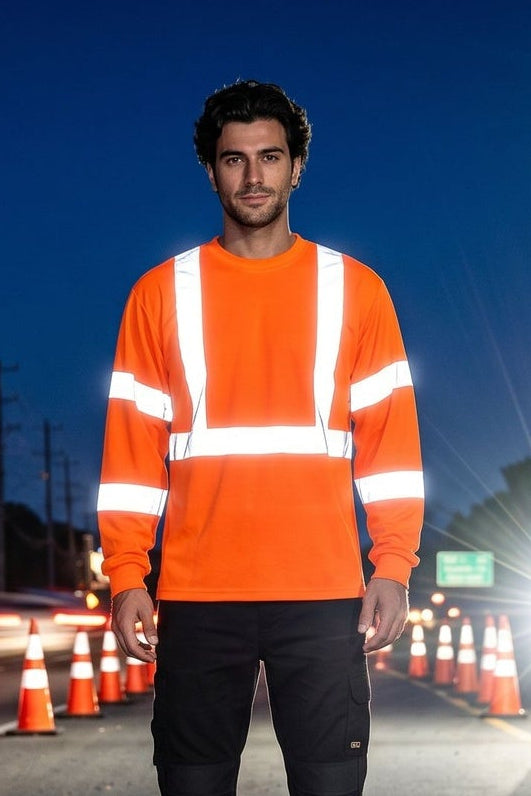
Fluorescent fabric color is nearly invisible without ambient light, so at night your visibility depends on how much reflective tape a garment has and how it's positioned. Garments with tape around the arms and torso (not just a single chest stripe) create a more recognizable human silhouette in headlights, which is part of why many night and road-adjacent jobs require ANSI Class 3 rather than Class 2.
Building a Night-Shift Kit
- Start with an ANSI Class 3 base layer — a long sleeve shirt or hoodie with full-torso and arm reflective tape.
- Layer a Class 3 outer jacket in cold months rather than covering reflective tape with a non-rated layer.
- Add a reflective vest over any layer when working closest to traffic, for a second visible band at a different height and angle.
- Keep tape clean — dirt and grime on reflective tape cuts its effectiveness at night more than it does in daylight.
Don't Layer Over Your Reflective Tape
A common mistake is throwing a plain jacket over a hi-vis shirt on a cold night — which covers the reflective tape entirely and defeats the purpose. If it's cold, the outer layer needs to be hi-vis rated too, not just whatever's warm.
Shop Class 3 Gear
Build a night-ready kit from our ANSI Class 3 collection, including Class 3 outerwear and reflective vests.
Compartir:
Parka vs Windbreaker vs Bomber: Choosing the Right Hi-Vis Outerwear for Your Climate