
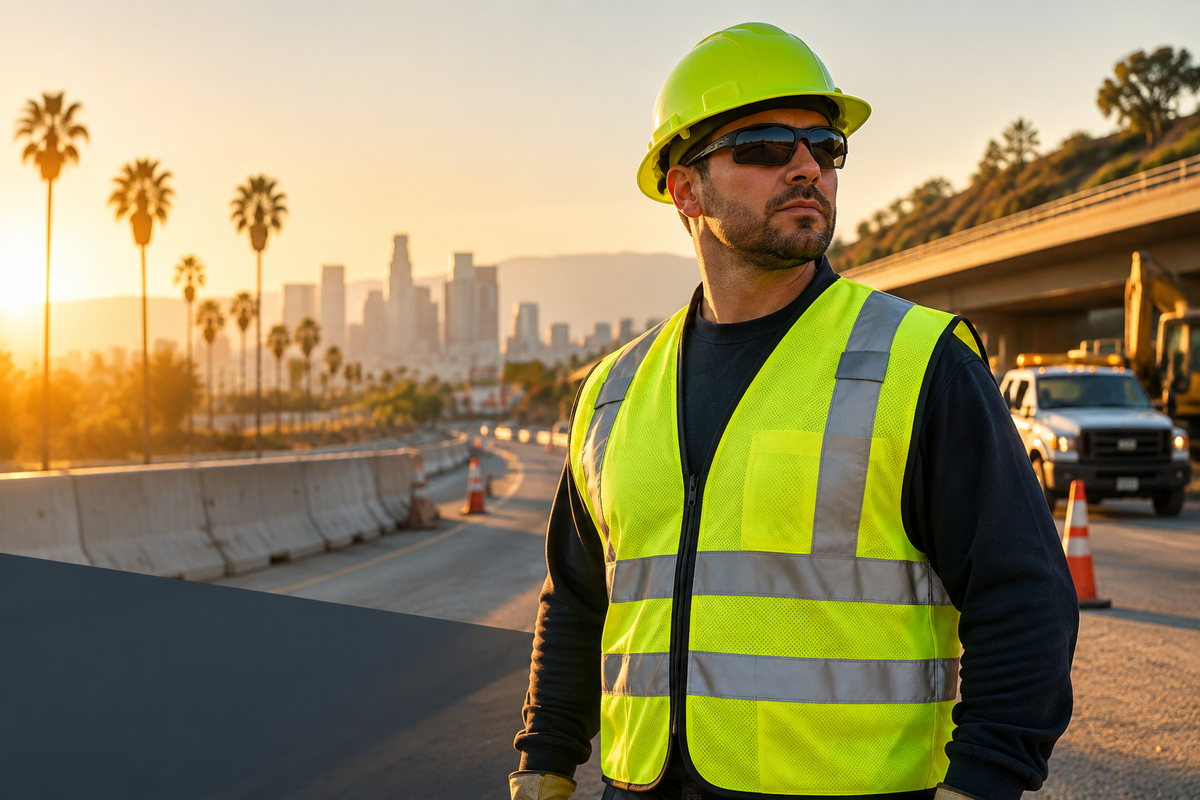
Quick answer: In California, Cal/OSHA's construction safety orders require workers on foot who are exposed to vehicle traffic, and all flaggers, to wear warning garments (vests, jackets or shirts) made to the ANSI/ISEA 107 high-visibility standard. After dark those garments must be retroreflective, with reflective material visible from at least 1,000 feet. The rules are in Title 8, Sections 1598 and 1599.
We're a Los Angeles company, so we get this question from California contractors all the time. Here's what the regulations say in plain English, and how to outfit a crew to meet them. This is a general overview, not legal advice. Always check the current regulation text and your site's safety plan.
What Title 8, Section 1598 requires (traffic control for public streets and highways)
Section 1598 of the California Code of Regulations, Title 8, covers traffic control on public streets and highways. The key points on clothing:
- Daytime: employees on foot who are exposed to the hazard of vehicular traffic must wear warning garments such as vests, jackets or shirts manufactured to ANSI/ISEA 107.
- Hours of darkness: warning garments must be retroreflective, made to ANSI/ISEA 107, with reflective material visible from at least 1,000 feet.
- White garment exception at night: white outer garments with qualifying retroreflective material may be worn after dark, but not in snow or fog.
- Choosing a class: employers pick the right ANSI class using the traffic manual, manufacturer specs, the ANSI/ISEA 107 appendix, or ATSSA guidance.
What Section 1599 requires for flaggers
Section 1599 applies the same garment rule directly to flaggers. By day they wear ANSI/ISEA 107 warning garments. After dark the flagger station must be lit so approaching traffic can clearly see the flagger, and the flagger must wear reflectorized ANSI/ISEA 107 garments visible from 1,000 feet.
Which ANSI class should a California crew wear?
The regulation doesn't name one class for every job, so you choose based on risk. A common approach:
| Situation | Typical choice | Example gear |
|---|---|---|
| Daytime street work, lower speeds, parking lots | ANSI Type R Class 2 | Class 2 Hi-Vis Vest with 4 Pockets |
| Surveying and inspection near traffic | ANSI Type R Class 2 surveyor vest | West Chester 47216 Surveyor Vest |
| Freeway work, speeds above ~50 mph, flagging, night work, bad weather | ANSI Type R Class 3 | Class 3 Long Sleeve Hi-Vis Shirt or Class 3 Windbreaker |
For a deeper breakdown, read ANSI Class 2 vs Class 3.
Staying compliant in California heat
Southern California crews face a real tension: rated hi-vis on top, and 100°F days. A few ways to handle both:
- Mesh-back or mesh-body garments breathe better than solid polyester. The Short Sleeve Hi-Vis Safety T-Shirt is 100% mesh polyester.
- A vest over a light shirt is often cooler than a rated long-sleeve shirt. Try a Class 2 vest over a moisture-wicking tee.
- Sun coverage: add a reflective UPF 50+ neck gaiter and UPF 50+ cooling arm sleeves. California also has its own heat illness prevention rules, so shade, water and rest still apply.
Common compliance gaps we see
- Safety-color cotton tees worn as "hi-vis." A safety green tee with no reflective tape is great for crew ID but is not an ANSI 107 garment. Put a rated vest over it.
- Faded or torn vests. A garment that has lost its brightness or has damaged tape may no longer perform to spec. See how to keep hi-vis bright longer.
- Logos covering tape. Printing over reflective stripes blocks them. Our custom vest logo guide shows safe placements.
- Jackets hiding the vest. In cold or rain the outer layer is what drivers see, so it needs to be rated too. See parka vs windbreaker vs bomber.
FAQ
Does Cal/OSHA require hi-vis on every construction site?
The sections above apply to employees exposed to vehicular traffic and to flaggers. Many general contractors require hi-vis on all their sites anyway, so check your site safety plan.
Which ANSI version does California reference?
The regulation text references ANSI/ISEA 107-2004. Garments certified to later editions of ANSI/ISEA 107 are what you'll find on the market today. Confirm acceptance with your safety officer or the agency you're working for.
Where can I buy compliant gear in Los Angeles?
We're based in Los Angeles and ship ANSI Class 2 and Class 3 gear statewide. Start with our Class 2 and Class 3 collections. Outfitting a whole crew? See our wholesale page.
Compartir:
Custom Safety Vests with Your Logo: Placement Rules That Keep You Compliant