
Cold-weather work has a specific failure mode: you dress for 6 a.m., you're soaked in sweat by 9, and then you're genuinely cold for the rest of the day because you're wet.
Layering solves it. But layering hi-vis has an extra constraint most guides ignore — your outermost layer is the one that has to carry your ANSI rating. Put an unrated jacket over a Class 3 hoodie and you've just made yourself non-compliant.
Here's a system that handles both problems.
The three-layer system
Layer 1: Base — move moisture
The base layer's only job is to get sweat off your skin. It does not need to be warm and it must not be cotton. Cotton holds moisture against you and, once wet, actively pulls heat out of your body.
A polyester hi-vis long sleeve tee works well here and doubles as your compliance layer if you end up stripping down mid-morning. Browse long sleeve safety shirts, or read why long sleeves outperform tees outdoors.
Layer 2: Mid — trap heat
This is your insulation, and it's the layer you add and remove as the day changes. A hooded sweatshirt is the standard answer because it's warm, it's cheap enough to own two of, and the hood adds real neck coverage.
The Hi-Vis Class 3 Zip-Up Hoodie with Pockets is the piece most crews build around — rated, so it works as an outer layer on milder days, and it zips so you can vent without stopping work. If you want warmth without fluorescent, look at enhanced-visibility pullovers.
More on choosing a work hoodie in our hi-vis hoodie guide.
Layer 3: Shell — block wind and water, carry the rating
Wind is what actually makes you cold. A shell that stops it changes your comfort more than another sweatshirt will. And since this is your outermost layer, this is where the ANSI rating has to live.
Match the shell to conditions:
- Wind and light rain, mild temps → Reflective Zip-Up Windbreaker. Packable, cheap, lives in the truck.
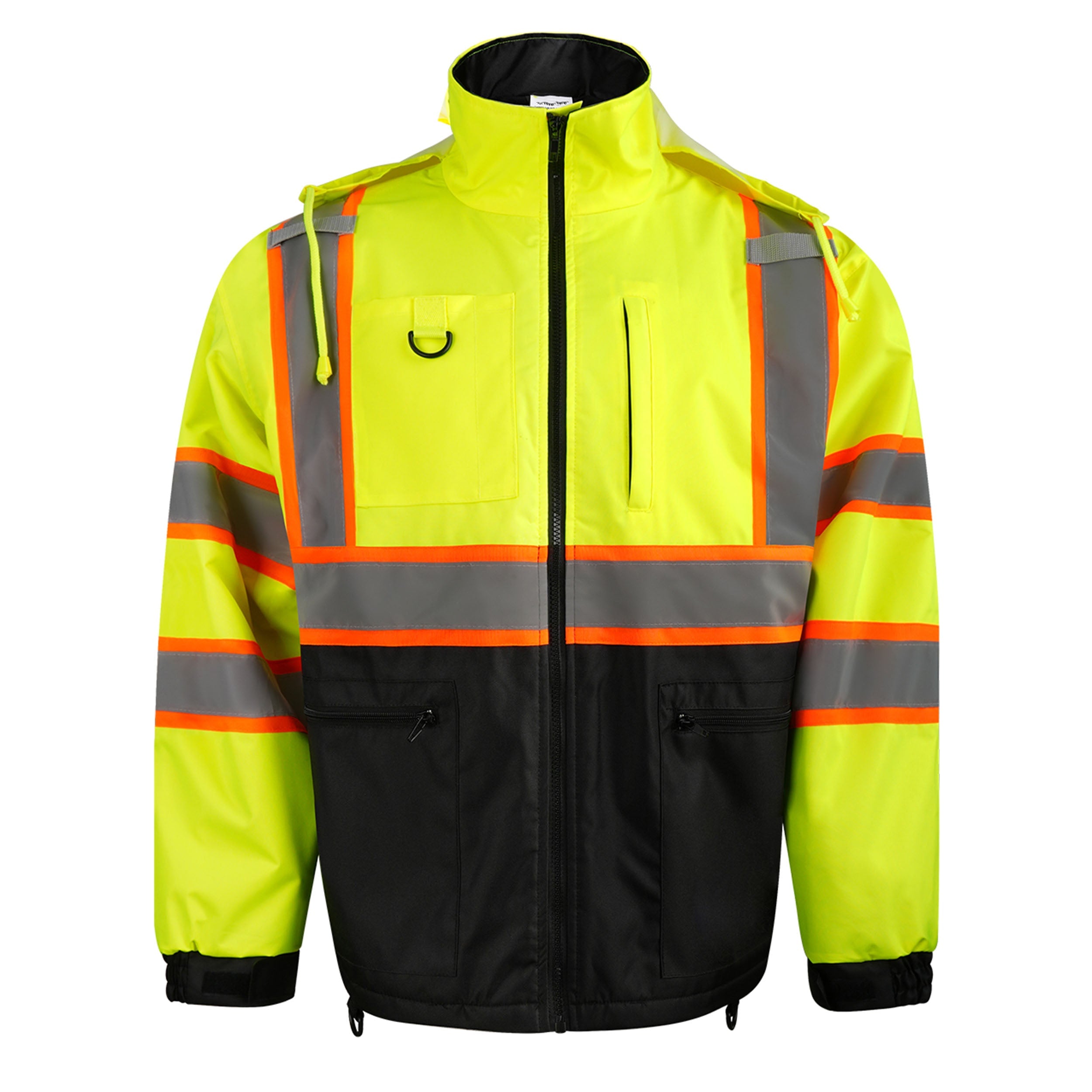
- Genuinely cold, active work → Hi-Vis Class 3 Double Strip Zip-Up Jacket with Hood. Two reflective bands, hood, full compliance.
- Cold and standing still → a hi-vis parka coat. Flagging, inspection, equipment watch — anything where you're not generating your own heat.
- No rating required → Double Strip Zip-Up Hooded Jacket in standard colors. Reflective detailing, no fluorescent.
Browse everything in ANSI hi-vis outerwear and non-ANSI enhanced visibility outerwear.
Five rules that make layering actually work
- Start slightly cold. If you're comfortable standing in the parking lot, you're overdressed for the work. You'll warm up within ten minutes.
- Vent before you sweat, not after. Unzip early. Once you're wet, no amount of layering fixes it until you change.
- Size the outer layer up. A shell that compresses your mid-layer kills the insulation it's supposed to protect. Two layers under a shell means at least one size up.
- Keep a dry mid-layer in the truck. The single highest-value thing on this list. A dry hoodie at lunch resets your whole afternoon.
- Check your tape in winter. Short days mean you're working in the dark at both ends. Shine a light on your reflective striping — if it looks dull grey instead of bright silver, it's not doing its job and the garment needs replacing.
The compliance mistake worth repeating
It's the most common hi-vis error in cold weather and it happens by accident: the temperature drops, someone pulls a personal jacket on over their rated hoodie, and now their reflective material is hidden. They feel safer and they're measurably less visible.
If you work in the cold and your site requires a rating, buy the rating into your shell. It's the one layer that's on all day. Our Class 2 vs Class 3 guide covers which one you need.
Buy cold-weather gear before it's cold
Every year the same thing happens: the first real cold snap hits and everyone orders hi-vis outerwear in the same week. Sizes go, especially in the middle of the range, and lead times stretch.
Late summer and early fall is when to buy. Start with the full outerwear collection, check new arrivals, or see what's moving in best sellers.
Compartir:
UPF 50+ Cooling Arm Sleeves: Sun Protection That Keeps Up With Your Workday
Arm Sleeve Sizing & Color Guide: Picking the Right Cooling Sleeves for the Job