
Somebody tells you the site requires "Class 2" and you nod, buy a vest, and hope it's right. Then an inspector looks at your sleeves. Let's clear this up properly.
What the classes are actually measuring
ANSI/ISEA 107 is the American standard for high-visibility safety apparel. It rates garments by two things: how much fluorescent background material they carry (the bright yellow-green or orange fabric that makes you visible in daylight) and how much retroreflective tape they carry (the grey striping that bounces headlights back at a driver in the dark).
More of both means a higher class. The class is not about garment type — a vest, a shirt and a hoodie can all be Class 2 or Class 3 depending on how they're built.
ANSI Class 2
Use it when: traffic moves faster than roughly 25 mph, or workers need to stand out against a complex or busy background.
Typical roles: roadway construction, utility work, surveying, parking and toll operations, airport ground crews, railway work, school crossing guards.
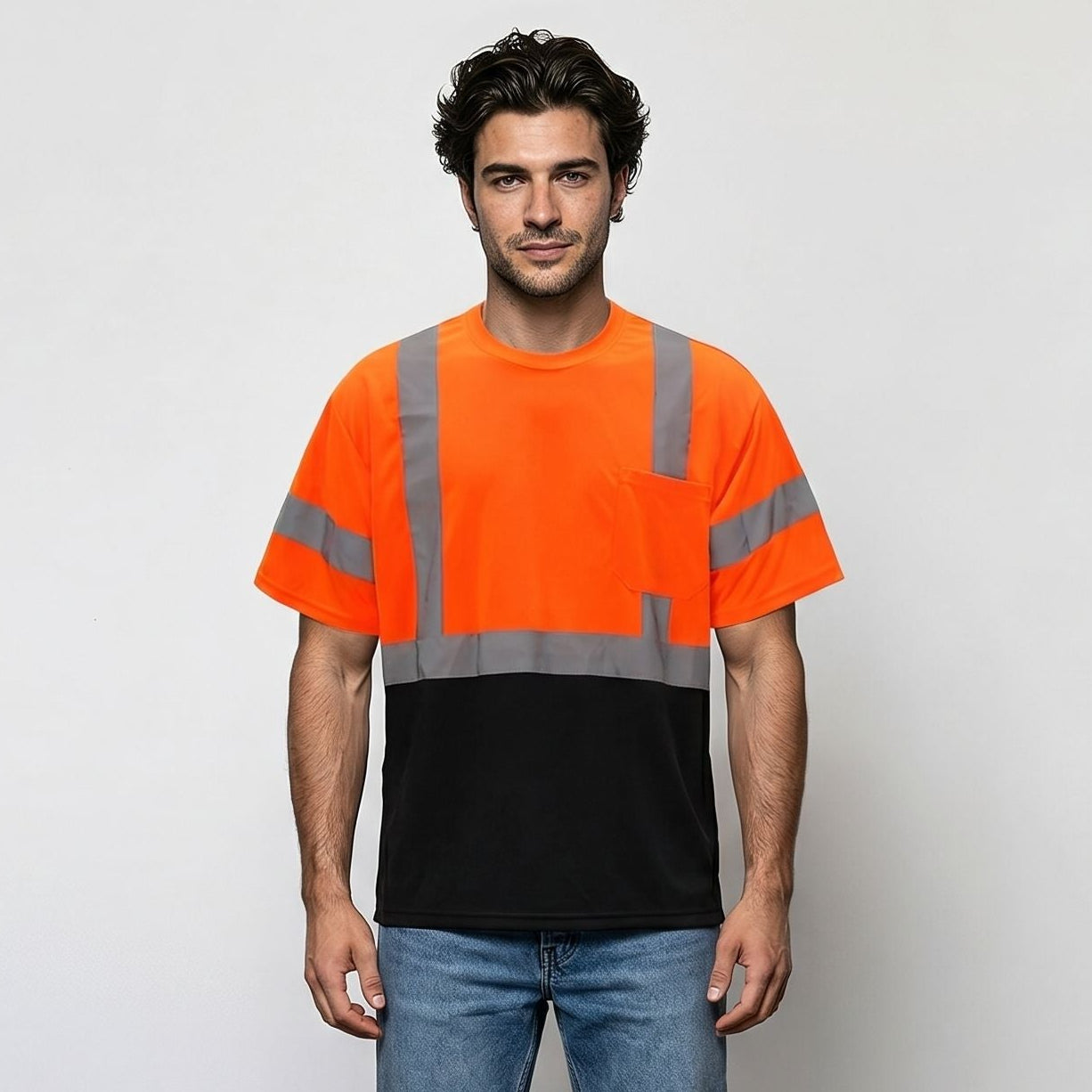
What it looks like in practice: a Class 2 vest or short-sleeve shirt covers the torso with a decent band of reflective tape. It does not require reflective material on the sleeves.
See our ANSI Class 2 safety apparel — including the 4-Pocket Hi-Vis Safety Vest and the Hi-Vis Short Sleeve T-Shirt with Front Pocket.
ANSI Class 3
Use it when: traffic moves fast, you're working at night or in poor weather, visibility is limited, or your job requires a driver to recognize you as a person — not just a bright shape — at a distance.
Typical roles: high-speed highway work, night roadwork, emergency response, flagging, towing and roadside assistance, snow removal, any operation where being seen late is being seen too late.
The key difference: Class 3 requires visibility on the limbs, not just the torso. That means sleeves with reflective material. A Class 3 vest on its own generally can't get you there — you need a rated long-sleeve garment, or a rated sleeved layer over the vest.
This is the part people get caught out by. Wearing a Class 2 vest over a plain hoodie does not add up to Class 3.
See our ANSI Class 3 safety apparel — including the Class 3 Zip-Up Hoodie with Pockets, the Class 3 Double Strip Hooded Jacket, and the Class 3 Hi-Vis Long Sleeve T-Shirt.
And Class 1?
Class 1 covers lower-risk environments — work areas well separated from traffic, with vehicles moving slowly. Warehouse yards, parking lots, some delivery and grounds work. See ANSI Class 1 safety apparel.
The mistake that costs people money
Your outermost layer determines your class. If you're wearing a Class 3 hi-vis long sleeve and you pull an unrated jacket over it, you are not Class 3 anymore — you're whatever that jacket is, which is nothing. The reflective material has to be visible to be doing anything.
This is why crews who work through the seasons often standardize on rated outerwear rather than rated base layers. Buy the compliance into the layer that's actually on the outside. Our cold weather layering guide covers how to build that system.
A second, smaller mistake: reflective tape wears out. A garment that's been washed sixty times and has cracked, dull striping may no longer perform to its original class even though the label still says Class 3. If your tape looks grey and matte instead of bright silver under a flashlight, replace it.
What if your site doesn't require a rating at all?
Plenty of work doesn't. Shop work, indoor warehouse, private property away from vehicle traffic, residential trades. In that case you may just want to be more visible without paying for certification or wearing fluorescent.
Our enhanced visibility non-ANSI line has reflective detailing in standard colors — the Double Strip Zip-Up Hooded Jacket is a good example. Reflective where it counts, without looking like highway gear.
Quick reference
- Slow traffic, separated work area → Class 1
- Traffic over ~25 mph, daylight, busy background → Class 2
- High speed, night, bad weather, or limb visibility required → Class 3
- No mandate, just want to be seen → enhanced visibility non-ANSI
Related reading: how to choose a hi-vis work hoodie and why long sleeves beat tees for outdoor work.
Or jump straight to safety shirts, safety vests and hi-vis outerwear.
Compartir:
Best Hi-Vis Hoodies for Work: ANSI Class 3 Zip-Ups That Actually Hold Up
Blank T-Shirts and Hoodies for Custom Printing: What to Look for Before You Order