
If you have ever ordered branded shirts for a crew and gotten back a logo that looked fuzzy at the edges, the problem probably was not the printer. It was the blank.
Decoration is only as good as the surface it lands on. A loose, low-density knit lets ink sink and spread; a tight, high-density one holds a clean edge. Here is what actually matters when you are picking blanks for a printed or embroidered run.
1. Yarn count and stitch density beat everything else
Fabric weight gets all the attention, but yarn count is what determines print clarity. A finer yarn spun at higher density gives you a smoother, tighter surface — which means sharper lines and less ink bleed.
The Jerzees 363M Short Sleeve Cotton T-Shirt is a good benchmark here: 4.7 oz, 100% pre-shrunk cotton jersey, spun with a softer 28/1's yarn at high stitch density specifically for print clarity. It is also made with sustainably sourced, USA-grown cotton in WRAP-certified facilities, which matters if you are bidding on public or corporate work with sourcing requirements.
2. Pre-shrunk, or your sizing is a guess
A blank that shrinks after the first wash ruins two things at once: the fit and the artwork. A chest print that was centered on a size L becomes a print that sits crooked and high once the body shortens.
Everything worth decorating should say pre-shrunk on the spec sheet. Both the Jerzees tees and the NuBlend Hooded Sweatshirt are pre-shrunk, so what you order in September still fits in March.
3. Pill resistance on fleece
Hoodies are the piece people keep the longest, which means they also show wear the fastest. Standard fleece pills — those little fuzzy balls that build up on the sleeves and pocket — and a pilled hoodie makes a printed logo look cheap even if the print itself is fine.
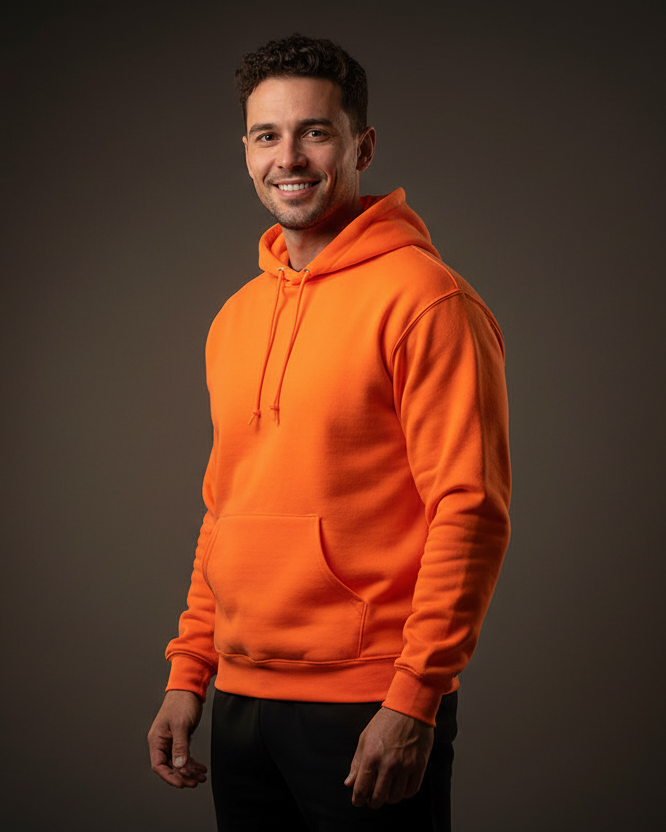
The NuBlend hoodie is 8 oz/yd² 50/50 cotton-poly fleece with a pill-resistant finish and a high-stitch-density face for printing. It has a 2-ply hood with grommets and matching drawcord, a front pouch pocket, double-needle stitching, and ribbed cuffs and waistband with spandex. Sizes run S through 5XL in Black, Navy, Royal Blue, Athletic Heather, and White. If your crew needs visibility, the same construction is available in the NuBlend Hooded Sweatshirt in Safety Colors.
4. Match the blank to the season, not just the budget
A single-blank uniform program almost never works across a full year. The practical setup is three tiers:
- Warm months — 363M short sleeve in basic colors, or 363M in safety colors if you need Safety Green or Safety Orange on site.
- Shoulder season — Jerzees 363L long sleeve in Black, Navy, and White, or the 363L in safety colors. Same 4.7 oz cotton and the same print surface, just more coverage.
- Cold months — the NuBlend hoodie over the top.
Using the same fabric family across all three means one logo file, one color match, and a consistent look no matter what the crew is wearing that week.
5. Do not forget headwear
Caps are the cheapest branded item per impression and the easiest add-on to a shirt order. Structured front panels with buckram hold embroidery flat and square; unstructured ones let the design sag. Browse the Hats & Caps collection for structured options that decorate cleanly.
What to send us for a print
Artwork is printed exactly as you submit it, so send the file the way you want it to appear. A few practical notes:
- Standard print width is 12 inches, which is also the maximum. Smaller is available on request.
- Send the highest-resolution file you have. Screenshots and social-media downloads rarely hold up at 12 inches wide.
- Transparent backgrounds print as transparent; white boxes print as white boxes.
Customization is available directly on the product listings, so you can pick your blank, size run, and colors in one place.
Where to start
If you are outfitting a crew, start with the blank you will use most and build outward. Browse Daily Basics T-Shirts and the wider Daily Basics range, or if you just need undecorated stock for the shop, the black cotton 3-pack is the cheapest way to keep spares on hand.
Ordering for a whole crew? Our wholesale page covers bulk pricing and has a quote form you can fill out in about a minute.
Compartir:
ANSI Class 2 vs Class 3: Which Hi-Vis Do You Actually Need on the Job?
Hi-Vis Long Sleeve Work Shirts: Sun Protection and Visibility in One Layer