
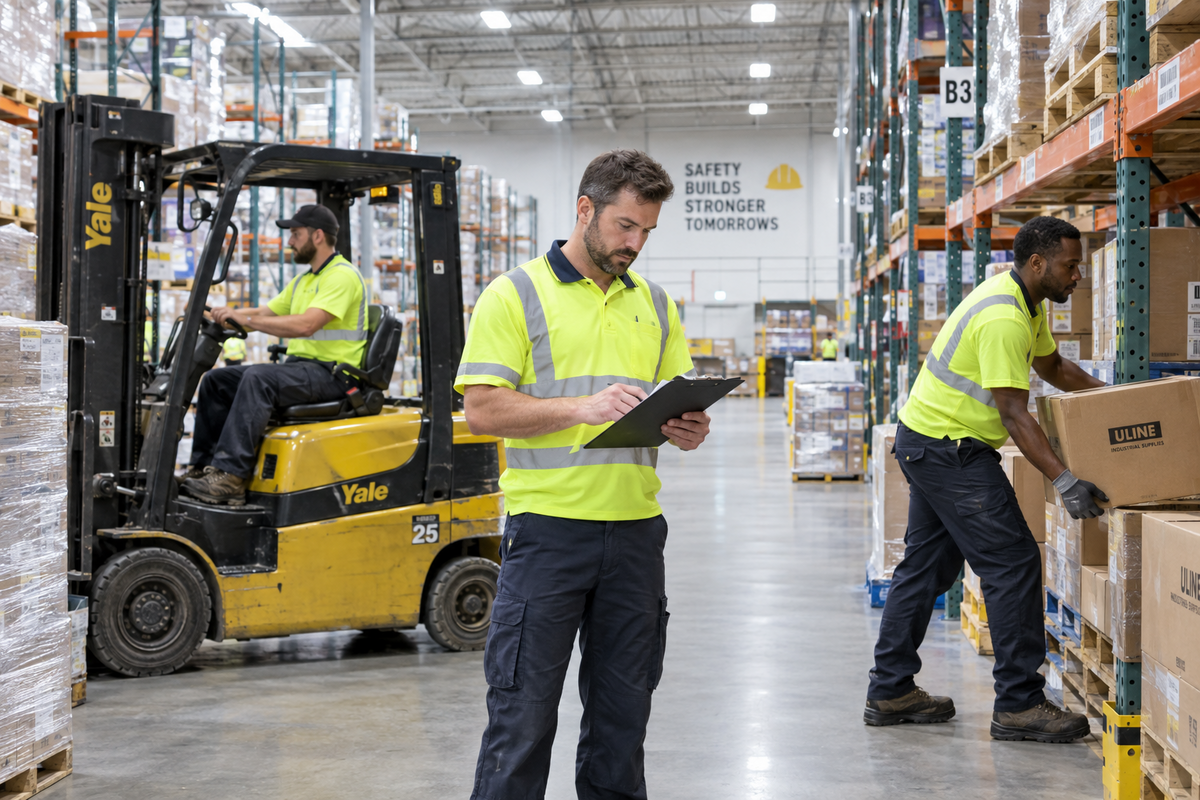
Quick answer: Most warehouse and 3PL workers don't need full ANSI Class 3 gear. The typical setup is color-coded enhanced-visibility vests (with reflective stripes) to identify roles, ANSI Class 2 vests for anyone working in dock, yard or forklift traffic areas, and breathable mesh shirts for hot buildings. Color-coding by role, like green for associates, orange for loaders and blue for leads, makes the floor safer and easier to manage.
Warehouses combine two hazards that make visibility matter: forklifts and pallet jacks moving fast in narrow aisles, and big open docks and yards with trucks. Here's how to outfit a distribution center, fulfillment or 3PL crew without overspending.
Match the garment to the zone
| Zone | Hazard | Recommended |
|---|---|---|
| Pick and pack, aisles | Forklifts and pallet jacks at low speed | Enhanced visibility vest or bright shirt |
| Receiving and shipping docks | Forklifts, trucks backing in | ANSI Class 2 vest |
| Yard and trailer lot | Yard trucks and tractor-trailers, often at night | ANSI Class 2, or Class 3 at night and in bad weather |
| Office and QA walking the floor | Mixed traffic | Visitor vest kept at the door |
Not sure where the line is? Read enhanced visibility vs ANSI hi-vis and ANSI Class 2 vs Class 3.
Color-code your floor
A consistent color system lets forklift drivers, supervisors and new hires read the floor instantly:
- Safety green or orange: associates working in traffic areas (ANSI)
- Royal blue or navy: leads and supervisors
- Red: safety team and first aid
- Pink or deep green: temps, trainees or seasonal workers
- Black: management or visitors
The Multi-Pocket Safety Vest is built for this. It comes in Red, Pink, Deep Green, Black, Navy and Royal Blue with reflective stripes and four pockets for scanners, pens and phones. It's one of our best-selling vests for warehouses. For the ANSI roles, pair it with the Class 2 Hi-Vis Vest with 4 Pockets in green or orange.
Pockets matter more than you'd think
Warehouse workers carry RF scanners, box cutters, markers, labels and phones. A vest with the right pockets keeps hands free and stops people from setting scanners down on racks. For leads and inventory control, the PIP Eleven-Pocket Surveyor Vest has room for everything. More in surveyor vests explained.
Beat the heat inside the building
Many warehouses aren't air-conditioned and get hotter than it is outside in summer. Choose:
- Basic Color Short Sleeve Mesh Shirt: breathable polyester mesh in Navy, Sand, Royal Blue and Dark Charcoal. It's great as a uniform shirt under a vest.
- Short Sleeve Hi-Vis Safety T-Shirt: ANSI safety green or orange in 100% mesh polyester, for dock and yard staff who'd rather not wear a vest.
In winter, docks with open doors get cold fast. A safety-color hoodie under a vest or a Class 3 windbreaker keeps the yard crew warm and visible.
Brand your team
3PLs that serve multiple clients often print the company name on vests and shirts so client visitors and drivers know who's who. Keep logos off reflective tape and modest on ANSI vests. See our custom vest logo guide. For uniform shirts, a printed Jerzees 363M tee is the budget-friendly standard.
Handling peak season
- Order temp vests before peak. Sizes run out industry-wide in Q4.
- Keep a bin of spares at the time clock in S-3XL.
- Inspect and replace faded or torn vests before peak starts. See when to replace hi-vis.
Outfitting a full building or multiple sites? Visit our wholesale page, or read how to build a uniform program.
FAQ
Is hi-vis required in a warehouse?
There isn't a single federal rule requiring hi-vis in every warehouse, but employers must assess hazards and provide appropriate PPE. Most facilities with forklift and truck traffic require vests at least in dock and yard areas. Check your company's safety policy.
What color vest should warehouse workers wear?
Safety green or orange for anyone in traffic areas, plus other colors to show roles. Keep the system simple and post a chart at the entrance.
Share:
When to Replace Hi-Vis Clothing: 6 Signs Your Safety Gear Is Done