
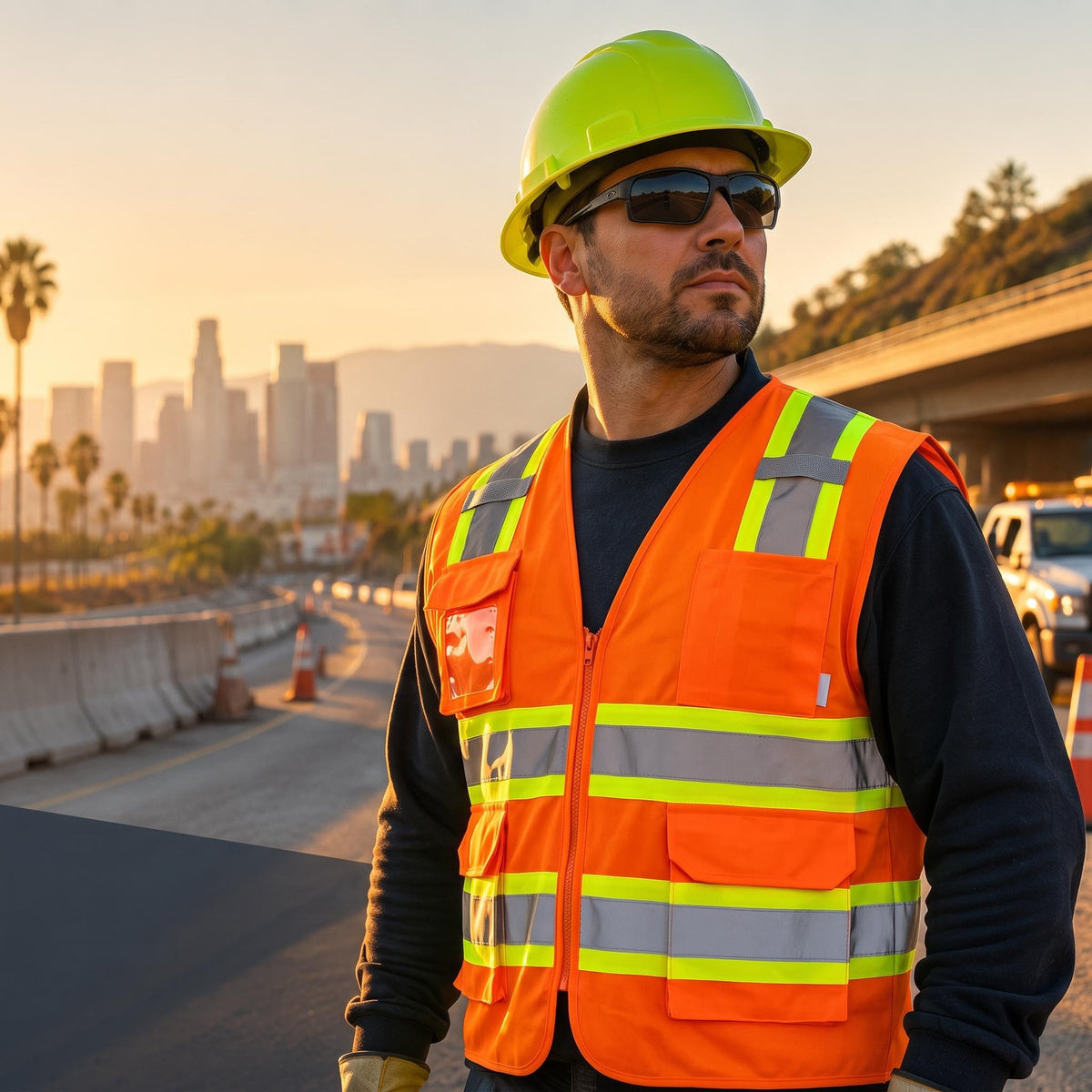
Quick answer: ANSI hi-vis garments are certified to ANSI/ISEA 107. They meet minimum amounts of fluorescent background fabric and retroreflective tape and are required for work near traffic and moving equipment. Enhanced visibility garments add reflective stripes or bright colors but aren't certified. They're a smart, often cheaper choice for warehouses, shops, events, yard work, and anywhere a rated garment isn't required.
Many buyers assume anything bright with reflective stripes counts as "hi-vis." It doesn't. Knowing the difference keeps you compliant where it matters and keeps you from overspending where it doesn't.
ANSI hi-vis vs enhanced visibility at a glance
| ANSI/ISEA 107 hi-vis | Enhanced visibility (non-ANSI) | |
|---|---|---|
| Certified to a standard | Yes, labeled with Type and Class | No |
| Colors | Fluorescent yellow-green, orange-red or red | Any color: navy, black, royal, red, pink and more |
| Reflective tape | Minimum area required | Optional, any amount |
| Required near traffic? | Yes, this is what's expected | No, not a substitute |
| Best for | Roadwork, traffic control, utilities, construction near equipment | Warehouses, shops, events, landscaping off-road, commuting, crew ID |
When you need ANSI-rated gear
If you or your crew work on foot near vehicles or heavy equipment, including roadways, parking lots, work zones, rail and airports, plan on ANSI/ISEA 107 garments. Class 2 is the usual baseline for roadway work. Class 3 is for higher speeds, complex backgrounds and night work. Our Class 2 vs Class 3 guide walks through it, and California readers should also see Cal/OSHA hi-vis requirements.
Shop rated gear: ANSI Class 2 apparel · ANSI Class 3 apparel · ANSI outerwear
When enhanced visibility is the better buy
- Warehouses and distribution: colored vests let you tell departments, temps and supervisors apart at a glance. See how to choose hi-vis for your industry.
- Events and volunteers: staff need to be easy to find, not ANSI-rated.
- Shop and plant floors: reflective stripes add a layer of visibility under mixed lighting without the look of a road-crew garment.
- Commuting and off-hours: walking or biking to the site in the dark? Reflective stripes help, and you can still wear the jacket to dinner.
- Brand and uniform looks: navy or black workwear with reflective accents looks sharp with a printed logo.
Our most popular enhanced visibility pieces
- Multi-Pocket Safety Vest with 4 Pockets in Red, Pink, Deep Green, Black, Navy and Royal Blue. A best seller for warehouses, events and color-coded crews.
- Lightweight Work Vest with Multiple Pockets: a light layer with storage.
- Long Sleeve Reflective Work Shirt with Front Pocket in Royal Blue and Black with 2-inch reflective stripes.
- Zip-Up Windbreaker with Reflective Strips: a weather layer that works on and off the clock.
- Hooded Work Shirt with Built-In Face Mask, Hi-Vis Colors: safety green and orange for sun and visibility. Non-ANSI, so pair it with a rated vest near traffic.
Browse all of it in Enhanced Visibility Outerwear.
Common mistakes to avoid
- Assuming "safety green" means compliant. Color alone doesn't make a garment ANSI-rated. Check the label for Type and Class.
- Buying Class 3 for a warehouse. It's overkill and hotter to wear. Enhanced visibility or Class 2 usually does the job.
- Using a colored vest on a road job. A navy or red vest with tape is not a road-work garment.
- Mixing up the two on a PO. Write "ANSI Class 2" or "non-ANSI" on your order so the right thing shows up.
FAQ
Is enhanced visibility clothing OSHA compliant?
OSHA doesn't certify garments. It relies on standards like ANSI/ISEA 107 where high-visibility clothing is required. Enhanced visibility gear is fine where no hi-vis requirement applies, but it doesn't satisfy one.
Can I put a logo on enhanced visibility gear?
Yes, and it's often easier than on rated gear because you aren't limited by minimum background area. See our custom vest logo guide.
Share:
Cal/OSHA Hi-Vis Requirements: What California Crews Working Near Traffic Need to Wear
Gifts for Construction Workers and Tradesmen They'll Actually Use (Most Under $25)