
UPF, Sun Protection, and Hi-Vis: Protecting Your Skin While You Work Outdoors
If you work construction, road, or industrial jobs in the sun all day, you already know how hard it can be on your body. Your back aches, your hands are beat up, and your face feels like it's been cooking since sunrise.
What many crews don't realize is just how big a long-term risk that daily sun exposure is for your skin—and how much protection you can actually get from the right hi-vis gear.
This guide from Safety Apparel Zone breaks down what UPF is, why sun protection matters for outdoor workers, and how to choose hi-vis shirts, safety vests, and outerwear that keep you seen and safe.
Why outdoor workers need sun protection as much as hi-vis
Most safety talks on site focus on falls, equipment, and traffic. But the sun is a serious workplace hazard too.
The real risk of working in the sun all day
Outdoor workers often:
- Spend 6–10 hours per day in direct or reflected sun
- Work during peak UV hours (10 a.m. to 4 p.m.)
- Sweat off sunscreen quickly—or forget to reapply
- Have exposed areas like the neck, ears, forearms, and lower legs
Over years, this adds up to 2–3 times the UV dose of an indoor worker. That means more sunburns, more skin damage, and higher odds of skin cancer later on. Learn more from the CDC NIOSH Outdoor Workers resource.
Hi-vis alone isn't enough
Hi-vis gear is critical for staying visible to drivers and equipment operators—but not all hi-vis automatically protects your skin from UV.
Some high-visibility shirts and vests are made from thin fabrics that let a lot of UV through. They might keep you seen by traffic but still leave your skin exposed to sun damage.
That's where UPF-rated clothing comes in.
What is UPF?
UPF (Ultraviolet Protection Factor) is a rating system for how well clothing blocks UV radiation from the sun.
- A shirt with UPF 50 lets only 1/50th of UV rays through (about 2%).
- Compare that with regular cotton tees, which might only be UPF 5–10 when stretched or wet.
Higher UPF = more protection.
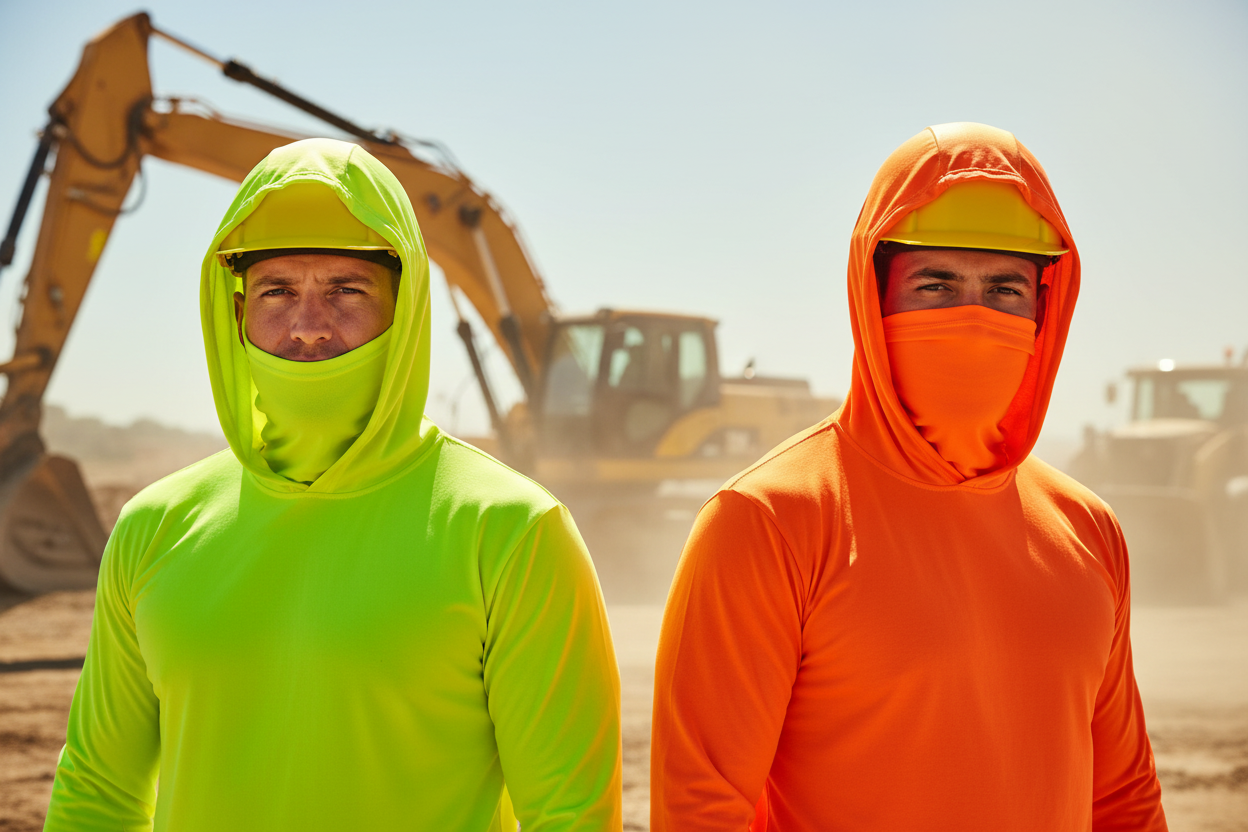
When you combine UPF-rated fabric with hi-vis colors and reflective tape, you get gear that helps protect you from both being hit and being burned.
What to look for in sun-protective hi-vis shirts
When choosing hi-vis shirts for outdoor crews, look for:
-
UPF rating in the product description
- UPF 30, 40, or 50+ is ideal for long days in the sun.
-
Tightly knit, lightweight fabric
- Dense enough to block UV, light enough to breathe.
-
Coverage where you need it
- Long-sleeve options for full arm protection.
- Tall sizes or drop-tail hems so lower backs stay covered when bending.
-
Moisture-wicking performance
- Keeps you cooler and more comfortable in the heat.
You can build a sun-smart wardrobe from our Hi-Vis Shirts Collection, prioritizing styles designed for hot-weather outdoor work.
What about safety vests and outerwear?
Vests and outerwear play a supporting role in sun protection.
Safety vests
Vests from our Safety Vests Collection add visibility but often leave arms and neck exposed. Use them together with:
- Long-sleeve UPF shirts
- Neck gaiters or sun hoods (where appropriate)
Outerwear
Hi-vis outerwear from our Hi-Vis Outerwear Collection also blocks a lot of UV simply by covering more skin. However, outerwear is usually worn in cooler or wet conditions, when sun intensity may be lower—but not zero.
On bright but cool days, a lightweight hi-vis jacket or windbreaker can be a smart sun and wind barrier.
Sunscreen + clothing: a practical combo
Clothing should be your first line of defense. Sunscreen fills in the gaps.
Simple approach for crews:
- Use UPF-rated hi-vis shirts as your base.
- Add sunscreen to exposed areas:
- Face, ears, neck
- Back of hands
- Reapply every 2 hours, or more often if sweating heavily.
Encourage workers to carry small sunscreen sticks or tubes in their pockets, tool belts, or trucks.
How many sun-protective pieces does each worker need?
For crews working outdoors most days between spring and fall, a realistic baseline is:
- 3–5 UPF hi-vis shirts per worker from our Hi-Vis Shirts Collection
- 1–2 safety vests from our Safety Vests Collection
- 1 lightweight hi-vis jacket or windbreaker from our Hi-Vis Outerwear Collection
This lets workers rotate shirts, stay covered, and stay visible through changing weather.
Simple sun-safety habits for crews
To make sun protection stick:
- Add UV and heat to your regular safety talks.
- Set expectations:
- Long-sleeve hi-vis shirts on high-UV days when possible.
- Sunscreen as part of required PPE.
- Provide a basic sun kit in each truck:
- Sunscreen
- Lip balm with SPF
- Extra hi-vis shirts in common sizes from our Hi-Vis Shirts Collection
Final thoughts
For outdoor workers, safety isn't just about helmets and harnesses—it's also about protecting your skin from years of sun exposure.
By choosing UPF-rated hi-vis shirts, using vests and outerwear smartly, and building sun habits into your safety culture, you can:
- Reduce the risk of sunburns and long-term skin damage
- Keep your crew more comfortable and focused
- Stay highly visible to drivers and equipment operators
You can start upgrading your crew's sun protection with:
At Safety Apparel Zone, we focus on gear that protects workers in the real world—on hot roads, bright job sites, and long days where the sun and traffic are both real hazards.
Share:
Hi-Vis Safety Apparel for Small Crews: How Many Pieces Do You Really Need?
Big & Tall Hi-Vis Workwear: Getting the Right Fit for Every Worker on Your Crew