
Hi-Vis Safety Apparel for Small Crews: How Many Pieces Do You Really Need?
If you run a small crew, you've probably asked some version of this question:
“How much hi-vis gear do we actually need to keep everyone safe and compliant—without wasting money?”
Between OSHA rules, ANSI classes, different jobsites, and changing weather, it can feel like guesswork. But it doesn't have to be.
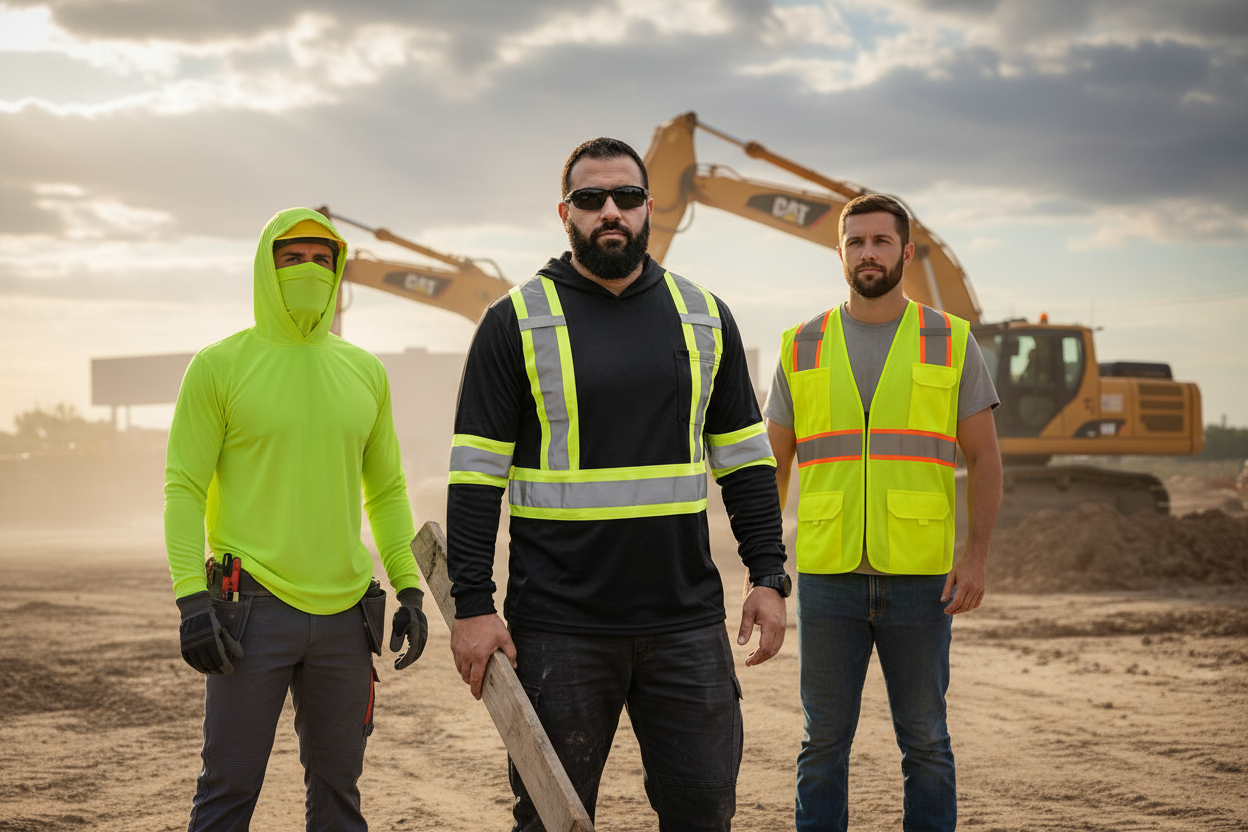
This guide from Safety Apparel Zone gives you a clear, numbers-based way to figure out how many shirts, vests, and outerwear pieces your team really needs. It's designed for U.S. construction, road, and industrial crews with 3–20 workers.
What “enough hi-vis” really means
Before you decide how many pieces to buy, define what “enough” looks like on a real job.
For most small crews, “enough hi-vis” means:
-
Every worker has compliant gear for every shift.
No one is borrowing a sweaty vest from the truck floor. -
You have backups when gear gets dirty, damaged, or soaked.
Workers don't have to choose between comfort and compliance. -
You're covered for weather changes.
There's a plan for hot days, cold mornings, and rain. -
You can onboard new hires without scrambling.
A new worker shouldn't be the only one in a non-matching or non-ANSI shirt.
To hit those targets, “one vest per person” is almost never enough.
The standards in plain English (OSHA + ANSI)
A quick refresher:
- OSHA expects employers to make sure workers exposed to vehicle or equipment traffic are visible. See the OSHA PPE official page for more.
- ANSI/ISEA 107 defines the performance requirements for high-visibility gear (Types and Classes).
For typical small crews working on or near roads, utilities, or construction sites:
- Type R, Class 2 is the minimum for most road and construction work.
- Type R, Class 3 is recommended for highway speeds, night work, or complex traffic.
You can meet those requirements using:
- Hi-vis shirts from our Hi-Vis Shirts Collection
- Safety vests from our Safety Vests Collection
- Hi-vis outerwear from our Hi-Vis Outerwear Collection
The key is to have enough pieces per worker so they can stay in compliant gear all week.
How many hi-vis shirts per worker?
Hi-vis shirts take the most abuse—sweat, dirt, concrete splatter, grease, and sun. They also need to be washed frequently.
A realistic baseline for outdoor crews is:
- 3–5 hi-vis shirts per worker
Why so many?
- Workers can rotate shirts throughout the week.
- There's always a clean, dry option available.
- You can pull damaged or faded shirts out of circulation without leaving people short.
Mix of styles:
- Short-sleeve shirts for hot weather and heavy physical work.
- Long-sleeve shirts for sun protection, cooler mornings, or light rain.
You can build those wardrobes from our Hi-Vis Shirts Collection.
How many safety vests per worker?
Vests are your most flexible hi-vis piece. They can:
- Turn a regular work shirt into a compliant setup.
- Be shared in a pinch—but it's better if everyone has their own.
Baseline recommendation:
- 1 primary vest per worker, plus
- 1–2 spare vests per crew truck as backups
For small companies that want a cleaner, more professional look, many choose:
- 2 vests per worker (one in use, one backup)
All of these can come from our Safety Vests Collection in Type R, Class 2 or Class 3, depending on your work.
How many hi-vis outerwear pieces per worker?
Outerwear is about both weather and visibility. In cold, wet, or dark conditions, the outer layer is what drivers and operators actually see.
For crews that work outdoors through fall and winter:
- 1 hi-vis hoodie or sweatshirt
- 1 hi-vis jacket, parka, or rain shell
Both should be hi-vis and ANSI-compliant. You can find options in our Hi-Vis Outerwear Collection.
Workers can layer these over shirts from our Hi-Vis Shirts Collection to stay warm and visible.
Sample gear plans for small crews
Here are simple starting points you can adapt.
3-person crew (light construction or service work)
Per worker:
- 3 hi-vis shirts from our Hi-Vis Shirts Collection
- 1 safety vest from our Safety Vests Collection
- 1 hi-vis hoodie or jacket (seasonal) from our Hi-Vis Outerwear Collection
Crew extras:
- 2 spare vests in the truck
- 2 extra shirts in common sizes
5-person crew (road, utility, or concrete)
Per worker:
- 4 hi-vis shirts from our Hi-Vis Shirts Collection
- 2 safety vests from our Safety Vests Collection
- 1 hi-vis hoodie from our Hi-Vis Outerwear Collection
- 1 hi-vis jacket or rain shell from our Hi-Vis Outerwear Collection
Crew extras:
- 3 spare vests (mixed sizes)
- 3–5 extra shirts for new hires or heavy wear
10-person crew (mixed day and night shifts)
Per worker:
- 5 hi-vis shirts from our Hi-Vis Shirts Collection
- 2 safety vests (consider Class 3 for night workers) from our Safety Vests Collection
- 1 hi-vis hoodie from our Hi-Vis Outerwear Collection
- 1 hi-vis winter jacket or parka from our Hi-Vis Outerwear Collection
Crew extras:
- 5 spare vests
- 8–10 extra shirts
- 2–3 extra outerwear pieces in common sizes
How to keep costs under control
You don't have to buy everything at once. Use this phased approach:
-
Phase 1: Core coverage
Make sure every worker has at least:- 2 hi-vis shirts from our Hi-Vis Shirts Collection
- 1 vest from our Safety Vests Collection
-
Phase 2: Build up rotation
Add shirts until you reach 3–5 per worker. -
Phase 3: Weather and night work
Add hoodies and jackets from our Hi-Vis Outerwear Collection, prioritizing night and highway crews. -
Phase 4: Buffers and new hires
Add extras in common sizes and set a simple replacement policy.
Simple replacement policy that actually works
To keep your crew in good gear without overthinking it:
- Inspect shirts and vests regularly.
- Replace items that are:
- Faded
- Torn or frayed
- Missing or cracked reflective tape
- Permanently stained in visibility zones
Create a basic rule of thumb like:
“If you wouldn't want to be seen wearing it in front of an inspector or GC, it's time to replace it.”
Final thoughts
For small crews, hi-vis planning doesn't have to be complicated. You just need:
- Enough clean, compliant shirts for every shift
- Vests that match your risk level and type of work
- Outerwear that keeps hi-vis on the outside in bad weather
You can build that system using:
At Safety Apparel Zone, we focus on hi-vis gear that works in the real world—small crews, tight budgets, and tough jobsites where visibility matters. Also see the CDC NIOSH Outdoor Workers resource for additional safety guidance.
Share:
Hi-Vis Hoodies & Jackets: Smart Layering for Cold Weather
UPF, Sun Protection, and Hi-Vis: Protecting Your Skin While You Work Outdoors