
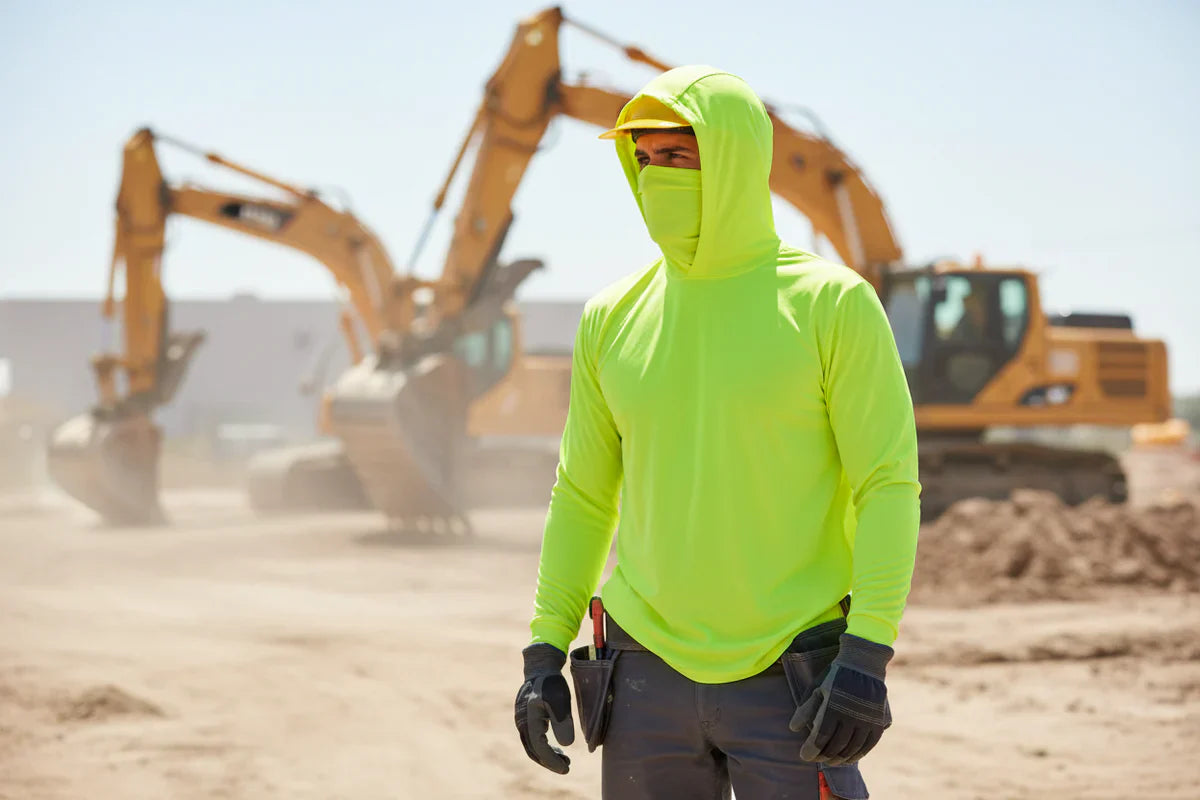
Big & Tall Hi-Vis Workwear: Getting the Right Fit for Every Worker on Your Crew
If you run a crew in construction, road work, utilities, or industrial plants, you already know your people don't come in a one-size-fits-all package.
Yet a lot of teams still hand out high-visibility vests and shirts in whatever sizes are left in the box—especially when it comes to big & tall workers.
That's not just uncomfortable. It can affect safety, compliance, and morale.
This guide from Safety Apparel Zone shows you how to get big & tall hi-vis workwear right so every worker on your crew can be seen, protected, and respected.
Why fit matters just as much as visibility
Hi-vis is designed to make workers easy to see. But if the gear doesn't fit, it won't be worn correctly—or at all.
Safety risks of ill-fitting hi-vis
Poor fit can:
- Expose dark layers or skin when shirts ride up
- Gap or strain at the front of vests when they're too small
- Hide reflective tape when fabric is bunched or twisted
- Increase snag hazards if garments are overly loose or long
- Reduce mobility so workers take gear off to move comfortably
When hi-vis doesn't fit right, workers are more likely to:
- Leave vests unzipped
- Roll up sleeves or tuck shirts into harnesses
- Avoid wearing jackets or rain gear even in bad conditions
All of that undermines the point of having hi-vis in the first place.
What big & tall actually means in hi-vis
“Big & tall” isn't just about larger sizes—it's about different proportions.
Good big & tall hi-vis gear should account for:
- Chest and stomach room without pulling
- Extra length in body and sleeves so gear doesn't ride up
- Wider shoulders and armholes for comfortable movement
When shopping in our Hi-Vis Shirts Collection, Safety Vests Collection, and Hi-Vis Outerwear Collection, look for size charts that explicitly list:
- Chest measurements
- Body length
- Sleeve length
How to size big & tall workers correctly
Here's a simple process you can use on any crew.
-
Measure key points
- Chest (around the fullest part)
- Waist
- Height
-
Compare to the brand's size chart
- Don't assume “XL in street clothes” = “XL in hi-vis.”
-
Account for layering
- If a worker will wear a hoodie or jacket under a vest, size up accordingly.
-
Test movement
- Have workers reach overhead, bend, and twist while wearing sample gear.
- Check for riding up, gapping, or tightness.
It can help to keep a small fitting kit (a few sizes of shirts, vests, and jackets) from our Hi-Vis Shirts Collection, Safety Vests Collection, and Hi-Vis Outerwear Collection for new hires to try on.
Building a big & tall-friendly gear plan
To make sure every worker is covered, build big & tall into your standard order—not as an afterthought.
Shirts
From our Hi-Vis Shirts Collection:
- Stock extended sizes (e.g., up to 3XL, 4XL, or beyond if available).
- Look for tall versions where possible (longer body and sleeves).
- Choose styles with roomy cuts rather than slim or fashion fits.
Vests
From our Safety Vests Collection:
- Include larger sizes with extra length.
- Consider adjustable or breakaway designs that offer more flexibility.
- Make sure reflective tape still sits high enough to be visible from all angles.
Outerwear
From our Hi-Vis Outerwear Collection:
- Choose jackets and hoodies with size ranges that match your crew.
- Check that sleeves are long enough and shoulders wide enough for layering.
- Remember that outerwear must fit comfortably over both shirts and harnesses.
Common mistakes with big & tall hi-vis
Avoid these issues we see on real jobsites:
-
Only ordering standard sizes
Bigger workers get whatever is left and end up in gear that doesn't fit. -
Assuming vests are “one size fits all”
Tight vests strain at the front and ride up, reducing visibility. -
Ignoring length
Standard-length shirts and jackets can ride up on taller workers, exposing midsections. -
Not involving workers in fit decisions
If gear is uncomfortable, workers will find ways not to wear it.
How many pieces should you stock in big & tall sizes?
For small crews, a good starting point is:
- At least 1–2 extra hi-vis shirts in big & tall sizes from our Hi-Vis Shirts Collection
- At least 1 extra vest in a larger size from our Safety Vests Collection
- 1 outerwear piece in a big & tall size (hoodie or jacket) from our Hi-Vis Outerwear Collection
For larger teams, scale up based on how many workers typically wear extended sizes. See the OSHA PPE guidelines for employer responsibilities around proper-fitting PPE.
Final thoughts
Big & tall workers are a crucial part of today's workforce. When their gear doesn't fit, it's not just a comfort issue—it's a safety issue.
By planning for big & tall hi-vis from the start, you can:
- Keep every worker visible and compliant
- Improve comfort and morale
- Present a more professional, consistent image on every job
You can start building a better fit today with:
At Safety Apparel Zone, we believe every worker deserves gear that fits their body and their job—no exceptions.
Share:
UPF, Sun Protection, and Hi-Vis: Protecting Your Skin While You Work Outdoors
ANSI Class 2 Shirts with Logo: OSHA-Ready Buying Guide for Safety Managers