
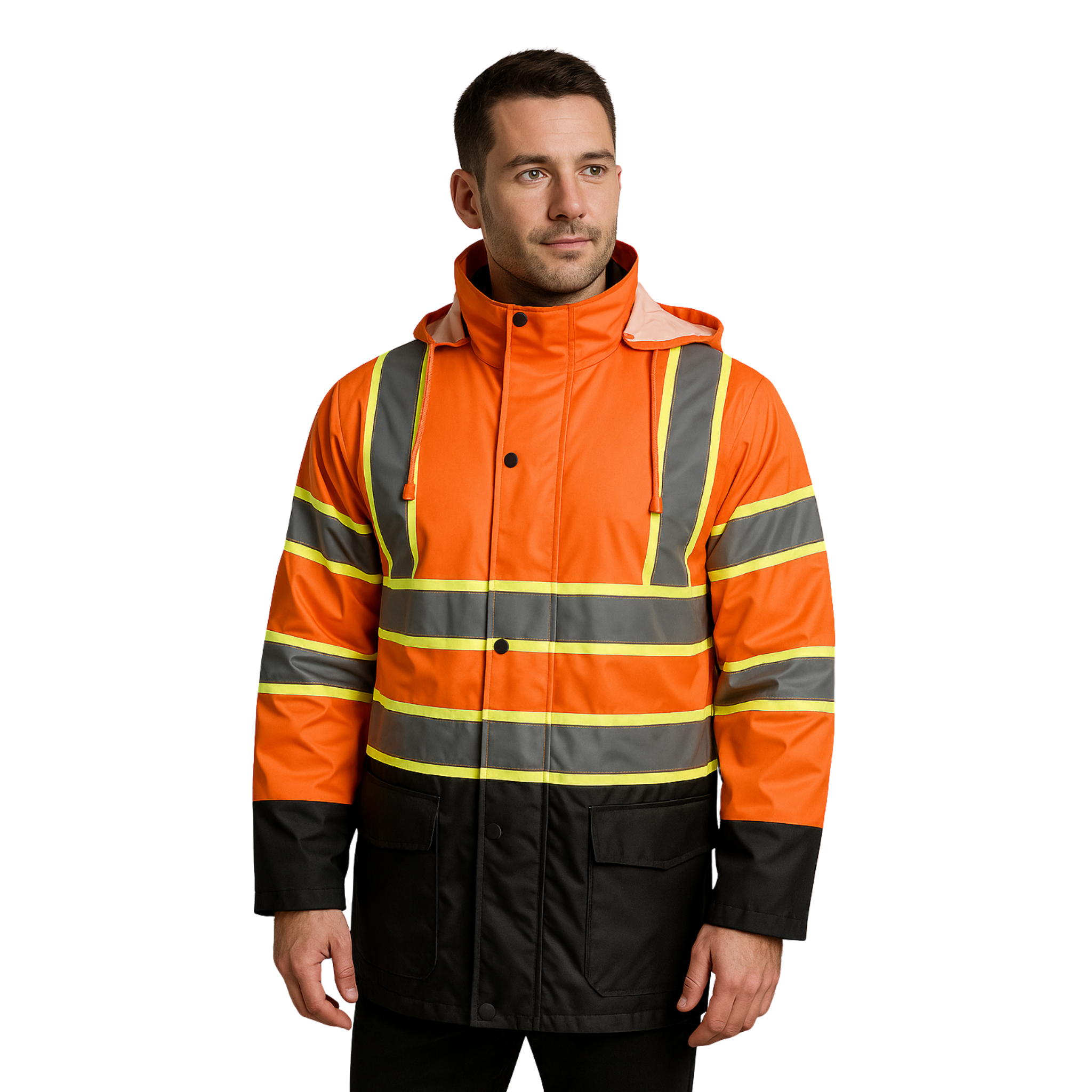
When it's time to add a hi-vis outer layer, the choice usually comes down to three styles — parka, windbreaker, or bomber — and each is built for a different kind of cold. Picking the wrong one means either sweating through a shift or freezing through it.
Parka Coats: Maximum Cold-Weather Coverage
A parka is the heaviest, warmest option in the lineup — longer length, insulated body, and a hood built for genuinely cold conditions. It's the right call for crews working outside through winter in colder climates, especially for roles with a lot of standing still (traffic control, inspection, utility work) where body heat generation is lower.
Windbreaker Jackets: Lightweight Wind and Light Rain Protection
A windbreaker trades insulation for packability and airflow. It's built to cut wind chill and shed light rain without trapping heat, which makes it the better choice for fall, spring, or mild-winter climates, and for crews layering it over a hoodie rather than wearing it as a standalone cold-weather piece.
Bomber Jackets: A Middle Ground
A hi-vis bomber sits between the two — more structure and warmth than a windbreaker, less bulk than a parka. It works well as a daily-driver jacket for crews who need something warmer than a windbreaker most mornings but don't need full parka coverage.
Matching the Jacket to Your Climate
- Cold, wet winters: parka coat
- Mild winters or transitional seasons: bomber jacket
- Wind and light rain, moderate temps: windbreaker
Whichever you choose, confirm the ANSI class matches your job requirement — reflective tape placement and coverage differ across outerwear styles.
Compare the Full Lineup
Browse Parka Coats, Windbreaker Jackets, and Bomber Jackets side by side, or see the complete hi-vis outerwear collection.
Share:
Building a Company Uniform Program: A Step-by-Step Guide for Safety Managers
Gearing Up for Night Shift: Hi-Vis Layering for Low-Light and After-Dark Work